In a world overflowing with information, organizations are no longer struggling to collect data—they are struggling to connect it. Customer records live in one system, product data in another, research documents somewhere else, and insights are often buried in isolated silos. Knowledge graph management software has emerged as a powerful solution to this fragmentation, helping businesses structure connected data in ways that make relationships visible, meaningful, and actionable.
TLDR: Knowledge graph management software helps organizations connect structured and unstructured data by modeling relationships between entities such as people, products, and events. These tools enable better search, smarter analytics, and richer AI applications. By visualizing and managing interconnected data, businesses gain deeper insights and improved decision-making. Choosing the right platform depends on scalability, integration options, and ease of use.
Rather than storing information in rows and columns alone, knowledge graphs organize data as entities (nodes) and relationships (edges). For example, instead of simply recording that “Alice purchased Product X,” a knowledge graph maps Alice as a customer, Product X as an item, and links them with a relationship like “purchased.” This interconnected approach unlocks far more value than static databases can provide.
What Is Knowledge Graph Management Software?
Knowledge graph management software provides the infrastructure to:
- Create and define ontologies (schemas that define entity types and relationships)
- Integrate multiple data sources into a unified graph
- Store, query, and analyze graph data
- Visualize relationships between entities
- Govern and maintain data quality
This software often supports graph query languages such as SPARQL or Cypher, enabling users to explore deeply nested relationships in ways traditional SQL databases cannot easily perform.
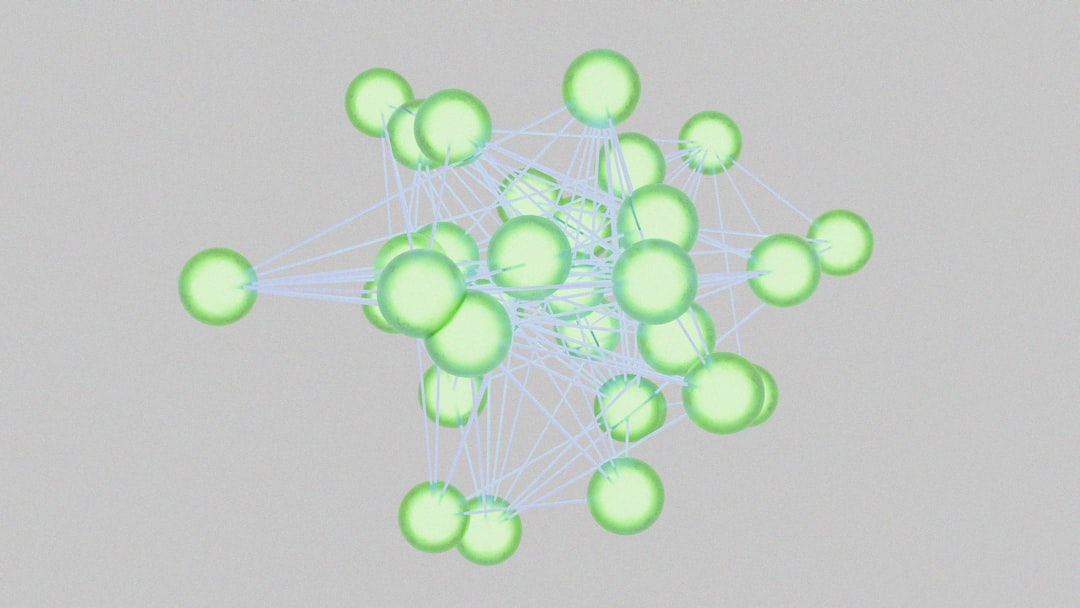
Above all, knowledge graph platforms allow organizations to move from data storage to knowledge representation—a shift that powers modern artificial intelligence, recommendation engines, fraud detection systems, and semantic search tools.
Why Connected Data Matters
Disconnected data creates friction. Multiple departments may define the same concept differently. Duplicate records can multiply. Insights may remain hidden because relationships are not explicitly captured.
Connected data solves these challenges in several powerful ways:
1. Contextual Understanding
Graphs capture not just facts, but the context around them. A transaction is not just a number—it is linked to a customer, a product category, a location, a time, and potentially a marketing campaign.
2. Enhanced Search Capabilities
Traditional keyword search retrieves matches. Knowledge graph–powered search retrieves meaningful connections, delivering richer and more accurate results.
3. AI and Machine Learning Enablement
AI models perform better when data is well-structured and semantically clear. Knowledge graphs provide a layer of meaning that improves recommendations, natural language processing, and predictive analytics.
4. Better Decision-Making
When executives can see how suppliers, products, risks, and regulations interconnect, they make faster and more informed strategic decisions.
Core Features to Look For
Not all knowledge graph tools are created equal. When evaluating solutions, consider these essential features:
- Scalability: Can it handle millions or billions of relationships?
- Flexible Data Ingestion: Does it support structured and unstructured data?
- Ontology Management: How easy is it to design and evolve schemas?
- Graph Query Support: Does it offer robust and intuitive query capabilities?
- Visualization Tools: Can users explore connections visually?
- Security and Governance: Are access controls and audits built in?
- Integration APIs: Does it integrate with BI tools, AI platforms, and enterprise systems?
Organizations should also assess whether they need an RDF-based semantic graph, a property graph model, or a hybrid approach.
Leading Knowledge Graph Management Tools
Below are some widely recognized platforms that help structure connected data effectively:
1. Neo4j
One of the most popular property graph databases, Neo4j is known for its developer-friendly query language (Cypher) and strong community support. It is widely used for fraud detection, recommendation engines, and network analysis.
2. Amazon Neptune
A fully managed graph database service supporting both property graph and RDF models. It integrates seamlessly with other cloud services and is well-suited for large-scale enterprise applications.
3. Stardog
Stardog combines graph databases with virtual knowledge graph capabilities. It allows organizations to query data across distributed systems without fully moving it, reducing duplication and complexity.
4. TigerGraph
Designed for high-performance analytics, TigerGraph excels at handling massive datasets and real-time graph processing.
5. Ontotext GraphDB
An RDF-based semantic graph database tailored for enterprise knowledge graphs and semantic integration projects.

Comparison Chart of Popular Tools
| Tool | Data Model | Best For | Deployment | Strength |
|---|---|---|---|---|
| Neo4j | Property Graph | Fraud detection, recommendations | Cloud & On-prem | Strong ecosystem and ease of use |
| Amazon Neptune | Property Graph & RDF | Enterprise-scale cloud applications | Cloud | Managed scalability |
| Stardog | RDF & Virtual Graph | Data integration across silos | Cloud & On-prem | Virtualization capabilities |
| TigerGraph | Property Graph | Real-time analytics at scale | Cloud & On-prem | High performance processing |
| Ontotext GraphDB | RDF | Semantic web and compliance | Cloud & On-prem | Strong semantic reasoning |
Use Cases Across Industries
Knowledge graph management software is transforming multiple industries.
Healthcare
Graphs connect patient records, treatments, medications, and research findings. This improves diagnostic insights and drug discovery initiatives.
Finance
Financial institutions use graphs to detect suspicious transaction patterns, uncover fraud rings, and assess risk more accurately.
E-commerce
Product recommendations become more intelligent when relationships between users, items, and browsing behavior are explicitly modeled.
Manufacturing
Companies link supply chains, parts, regulatory information, and operational data to anticipate disruptions and ensure compliance.
Image not found in postmetaImplementing a Knowledge Graph Successfully
Adopting knowledge graph technology requires more than just installing software. It involves strategic planning and organizational alignment.
1. Start with a Clear Use Case
Define measurable goals—improving search accuracy, reducing fraud losses, speeding up research, or enhancing personalization.
2. Design a Robust Ontology
Your ontology is the blueprint of your knowledge graph. Invest time in defining entities and relationships precisely. Involve domain experts to ensure accuracy.
3. Integrate Gradually
Begin with a limited dataset and expand incrementally. Avoid trying to model the entire enterprise at once.
4. Ensure Data Governance
Establish procedures for data validation, updates, versioning, and access controls.
5. Provide Training
Teams need to understand graph thinking. Training analysts and developers in query languages and modeling practices is critical.
The Future of Knowledge Graph Management
As AI continues to advance, the importance of structured, connected data will only grow. Large language models, recommendation systems, and predictive analytics platforms increasingly rely on well-organized knowledge sources. Knowledge graphs act as a grounding layer, ensuring AI outputs are more explainable and trustworthy.
Emerging trends include:
- Automated ontology generation through machine learning
- Real-time graph analytics for dynamic decision environments
- Integration with generative AI for contextual responses
- Improved visualization interfaces for non-technical users
Organizations that invest early in knowledge graph management are building a strong foundation for intelligent systems and long-term competitiveness.
Conclusion
Knowledge graph management software is more than a technical tool—it is a strategic capability. By structuring connected data into meaningful relationships, organizations move beyond isolated information toward true knowledge integration. Whether powering fraud detection in finance, improving patient outcomes in healthcare, or enabling smarter search in e-commerce, knowledge graphs provide the connective tissue that modern data ecosystems demand.
In an era defined by complexity and information overload, the ability to see how everything connects may be the most valuable insight of all.