
Immersive technology is moving from novelty to infrastructure, and augmented reality is one of the clearest signs of that shift. The idea behind future immersive technology ARK augmented reality can be understood as a next-generation “ark” for digital experiences: a connected environment where physical places, intelligent data, spatial computing, and human interaction come together. Instead of escaping into a fully virtual world, AR enhances the world already around us, turning streets, classrooms, factories, hospitals, homes, and entertainment venues into interactive digital layers.
TLDR: Augmented reality is becoming a core part of future immersive technology because it blends useful digital information with the physical world. An “ARK” approach to AR suggests a connected ecosystem where devices, AI, spatial maps, and shared experiences work together. Its biggest impacts will be seen in education, healthcare, retail, industry, entertainment, and everyday productivity. The future of AR depends on better hardware, ethical data use, realistic design, and experiences that solve real problems.
What Is Future Immersive Technology ARK Augmented Reality?
At its simplest, augmented reality places digital content over the real world. This may happen through a smartphone camera, smart glasses, a vehicle windshield, a headset, or even future contact lenses. Unlike virtual reality, which replaces your surroundings with a simulated environment, AR adds contextual information to what you already see.
The term ARK can be thought of as a metaphor for a future-ready AR ecosystem. Just as an ark preserves and carries essential things into a new era, an ARK-style augmented reality platform could carry digital knowledge, identity, communication, navigation, entertainment, and work tools into the physical spaces we occupy every day.
In practical terms, this means more than floating graphics. It means AR systems that can understand rooms, recognize objects, respond to gestures, remember spatial locations, and coordinate with artificial intelligence. The result is a world where digital experiences are no longer trapped inside screens.

How Augmented Reality Works
Modern AR relies on several technologies working together. A camera or sensor captures the environment, software interprets that space, and a display shows digital content aligned with the real world. The more advanced the system, the more naturally the virtual objects appear to belong in the environment.
Key building blocks include:
- Computer vision: Helps AR devices identify surfaces, objects, people, and movement.
- Spatial mapping: Creates a digital understanding of rooms, streets, or landscapes.
- Simultaneous localization and mapping: Often called SLAM, this allows devices to track their position while building a map of the surroundings.
- Artificial intelligence: Interprets context, predicts user needs, and personalizes content.
- Cloud computing: Stores shared spatial data and delivers large-scale AR experiences.
- Wearable displays: Smart glasses and headsets make AR more natural than holding up a phone.
The most exciting future AR systems will not simply display information. They will understand where you are, what you are doing, and what kind of help or experience would be useful at that moment.
Why AR Is Becoming So Important
For decades, people adapted themselves to computers. We sat at desks, stared at screens, tapped keyboards, and navigated flat menus. Future immersive technology reverses that relationship. It allows computing to adapt to people, places, bodies, and activities.
AR is especially powerful because it does not require users to disconnect from reality. A surgeon can see patient data while operating. A mechanic can view repair instructions on top of an engine. A student can explore a 3D model of the solar system in the classroom. A tourist can walk through ancient ruins and see how they looked centuries ago.
This makes AR valuable in both professional and personal contexts. It can improve safety, speed, learning, creativity, and confidence. Instead of searching for instructions on a separate screen, users can receive guidance exactly where they need it.
The ARK Concept: A Connected Layer Over Reality
The future of AR will not be defined by isolated apps alone. It will be shaped by interconnected systems. An ARK-style immersive platform would function like a persistent digital layer over the real world, available across devices and locations.
Imagine walking into a workspace where your notes appear on the wall, your calendar floats beside your desk, and a 3D product prototype sits in the middle of the room. Later, you enter a store and see personalized product comparisons, sustainability data, and virtual try-on options. At home, your kitchen projects cooking instructions onto the counter while your fitness coach appears in your living room.
This kind of environment would require shared standards, strong privacy controls, accurate spatial mapping, and seamless interoperability. The goal is not to overwhelm reality with digital noise. The goal is to create useful, calm, and intelligent augmentation.
Major Applications of Future AR
1. Education and Training
AR can turn learning into an interactive experience. Instead of reading about anatomy, students can explore a life-size human body model. Instead of looking at flat diagrams of machinery, trainees can disassemble a virtual engine layer by layer. History lessons can become immersive reconstructions, and science experiments can be safely simulated before being performed in real life.
In workplace training, AR can reduce mistakes by providing real-time guidance. New employees can follow visual prompts, safety warnings, and performance feedback while learning complex tasks.
2. Healthcare and Medicine
Healthcare is one of the most promising fields for augmented reality. AR can help doctors visualize scans, veins, organs, or surgical plans directly on a patient’s body. Medical students can practice procedures using realistic simulations. Remote specialists can assist local clinicians by seeing what they see and adding visual guidance.

For patients, AR may support rehabilitation, mental health therapy, medication reminders, and accessible health education. When combined with AI, AR could explain symptoms, guide exercises, or help people manage chronic conditions more effectively.
3. Retail and Commerce
AR is already changing the way people shop. Customers can preview furniture in their homes, try on glasses or clothing virtually, and compare products without visiting a physical store. In the future, AR shopping could become more personalized, social, and location-aware.
A shopper might look at a product and instantly see reviews, alternative colors, repair information, carbon footprint, and compatibility with items they already own. For brands and retailers, AR offers a way to make shopping more informative and engaging without relying only on traditional advertising.
4. Manufacturing and Field Work
Industrial AR can improve efficiency by placing instructions, measurements, warnings, and diagnostics directly in a worker’s field of view. Engineers can inspect equipment with digital overlays that show temperature, pressure, maintenance history, or hidden components.
This is especially useful for complex environments such as factories, power plants, aircraft maintenance facilities, and logistics centers. AR can reduce downtime, improve safety, and help less experienced workers perform advanced tasks with expert-level support.
5. Entertainment, Gaming, and Social Experiences
AR entertainment has the potential to transform cities, parks, homes, and events into interactive stages. Games can unfold across neighborhoods. Concerts can include holographic performers. Museums can bring artifacts to life. Sports fans can see live statistics above the field while watching a match.
Social AR may be even more transformative. Friends in different locations could share the same digital objects in real space. Families could leave virtual messages around the home. Remote colleagues could collaborate around the same 3D model as if standing together.
The Role of AI in Future ARK Augmented Reality
Artificial intelligence will be essential to the next generation of AR. Without AI, AR is mostly a display technology. With AI, it becomes a responsive assistant.
AI can help AR systems:
- Recognize objects and explain how to use them.
- Translate signs, menus, and conversations in real time.
- Summarize meetings and place action items in relevant locations.
- Predict what information a user needs based on context.
- Create realistic 3D content from simple voice or text prompts.
- Filter distractions and show only the most useful digital elements.
For example, an AI-powered AR assistant could guide a traveler through an airport, translate announcements, point out the correct gate, and warn about delays. In a workshop, it could identify a broken part and show the repair process step by step.
Hardware: From Phones to Smart Glasses
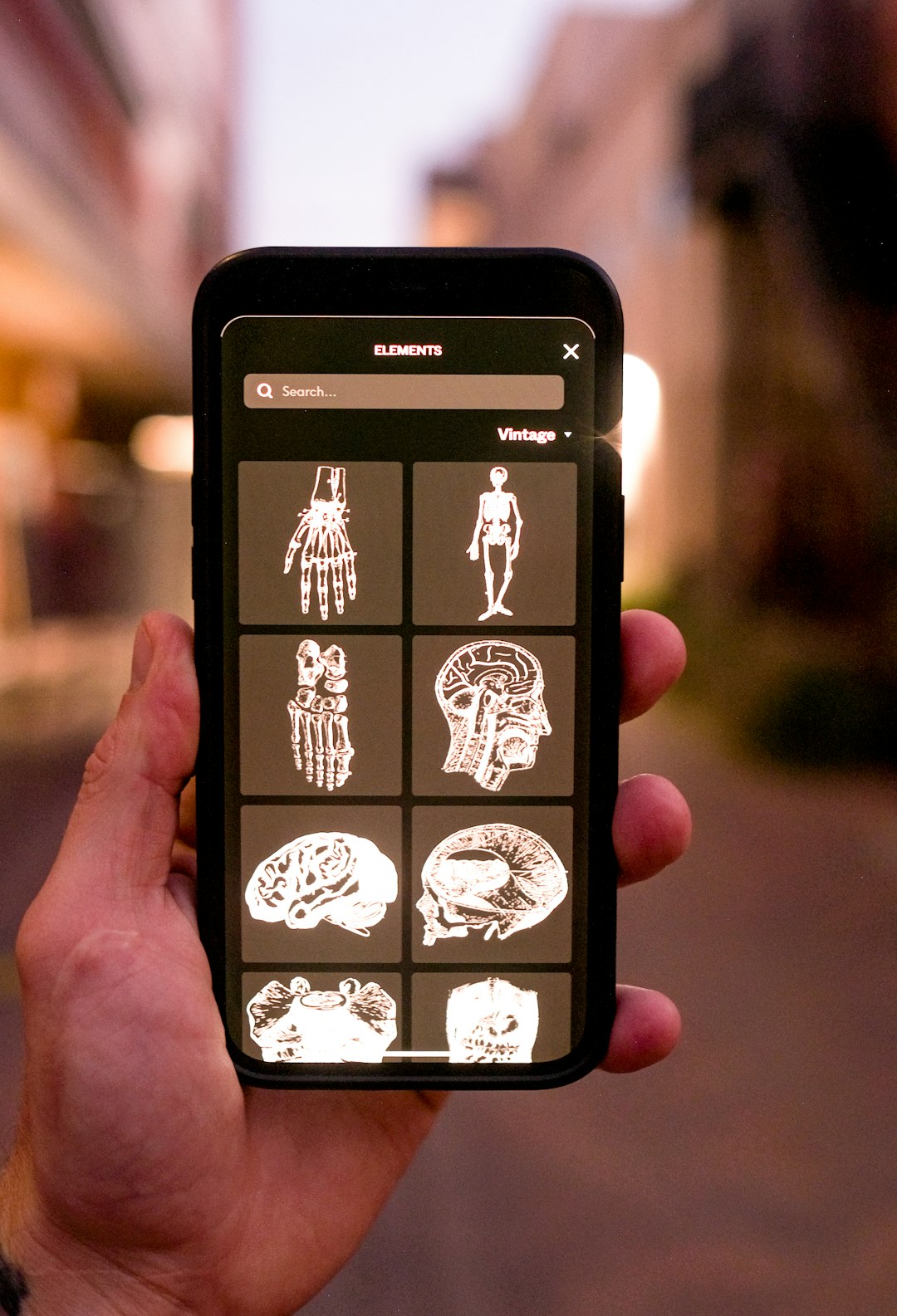
Today, most AR experiences happen through smartphones. This is useful but limited. Holding a phone between yourself and the world is not the most natural way to experience augmented reality. The real breakthrough will come when lightweight smart glasses become comfortable, stylish, affordable, and powerful enough for daily use.
Future AR hardware may include:
- Smart glasses for everyday overlays, communication, and navigation.
- Mixed reality headsets for advanced work, design, gaming, and simulation.
- Vehicle displays that project navigation and safety alerts onto windshields.
- Wearable sensors that track gestures, posture, and environmental conditions.
- Haptic devices that let users feel virtual objects through vibration or pressure.
For AR to become mainstream, hardware must feel less like equipment and more like normal eyewear. Battery life, heat, field of view, brightness, privacy indicators, and comfort will all matter.
Challenges and Ethical Questions
As exciting as AR is, it also raises serious concerns. A world filled with digital overlays could become distracting, manipulative, or invasive if poorly designed. Because AR devices may use cameras, microphones, location data, and biometric sensors, privacy must be treated as a foundation rather than an afterthought.
Important challenges include:
- Privacy: Who controls spatial maps of homes, offices, and public places?
- Security: How can systems prevent fake overlays, hacked instructions, or identity theft?
- Digital clutter: How do designers prevent the world from becoming visually overwhelming?
- Accessibility: Will AR work for people with different abilities, languages, and needs?
- Social acceptance: How will people feel around others wearing always-on cameras?
- Dependence: Could constant guidance weaken memory, navigation skills, or independent judgment?
The best future AR systems will be transparent, permission-based, and respectful. Users should know what data is being collected, why it is needed, and how to turn features off. Public spaces may also require new etiquette and regulations for immersive technology.
Design Principles for Meaningful AR
Great AR is not about adding as many effects as possible. It is about placing the right information in the right place at the right time. The most successful AR experiences will feel almost invisible until needed.
Designers and developers should focus on these principles:
- Usefulness first: Every digital element should solve a problem or enrich the experience.
- Context awareness: AR should adapt to location, activity, lighting, and user intent.
- Minimal distraction: Visuals should be clear, calm, and easy to dismiss.
- Human control: Users should decide what appears, when, and how.
- Inclusive design: Experiences should support different physical, sensory, and cognitive needs.
- Trust and safety: Sensitive uses, especially in medicine, transport, and industry, must be accurate and secure.
What the Next Decade May Look Like
Over the next ten years, augmented reality will likely move through several stages. First, phone-based AR will continue improving through better cameras, AI features, and web-based experiences. Next, specialized AR headsets will grow in workplaces where the value is clear, such as manufacturing, healthcare, architecture, and training. Finally, consumer smart glasses may become common once they are comfortable and socially acceptable.
We may also see the rise of persistent AR spaces. A classroom could maintain shared 3D learning materials throughout the school year. A city could provide real-time transit, accessibility, historical, and emergency information through public AR layers. A home could remember where virtual objects belong and synchronize them across family members’ devices.
This is where the ARK idea becomes especially powerful: a stable, intelligent, secure vessel for immersive digital life. Instead of thousands of disconnected experiences, users could move through a coherent augmented world that supports work, learning, creativity, health, and play.
Final Thoughts
Future immersive technology ARK augmented reality represents more than a technical trend. It points toward a major change in how people interact with information. Screens will not disappear, but they will no longer be the only gateway to digital life. Data, media, communication, and intelligence will increasingly appear within the spaces where people actually live and work.
The most successful AR future will not be the loudest or flashiest one. It will be the one that makes reality more understandable, more creative, more accessible, and more human. If developed responsibly, augmented reality can become a practical bridge between the physical and digital worlds: an immersive ark carrying knowledge, collaboration, and imagination into the next era of computing.