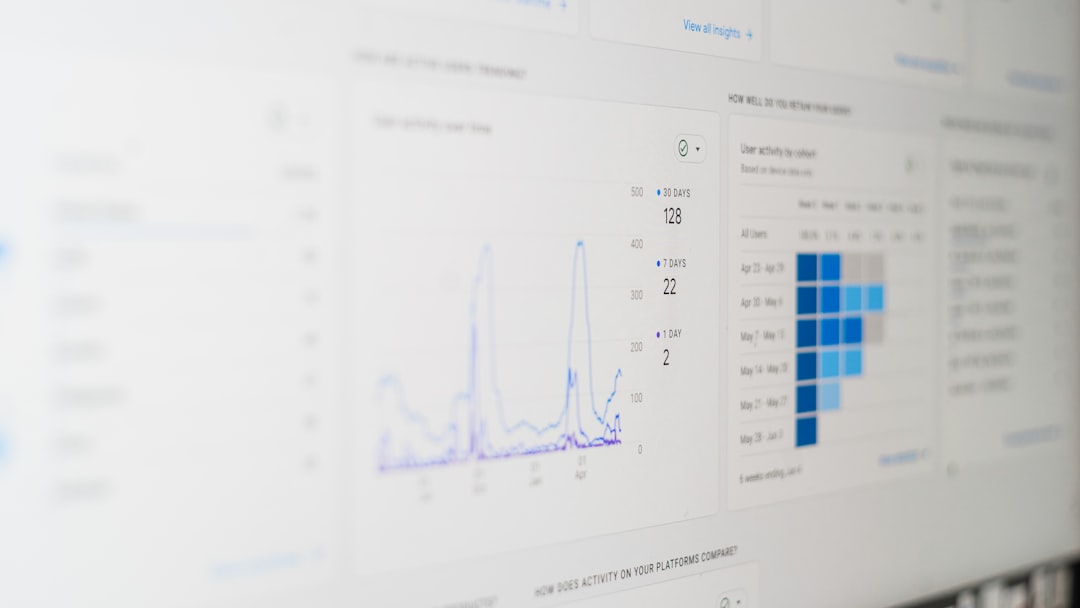
Machine learning models rarely fail all at once. More often, they degrade quietly over time—predictions become less accurate, data shifts subtly, and performance metrics slip below acceptable thresholds before anyone notices. In modern production environments, where models drive revenue, operations, compliance, and customer experience, maintaining accuracy is not optional. It is a continuous responsibility. That is where model monitoring applications play a central role.
TL;DR: Model monitoring applications help organizations detect performance drift, data anomalies, and operational failures in production machine learning systems. They provide real-time alerts, performance dashboards, and tools for root cause analysis. By continuously tracking model health and data quality, these platforms ensure that models remain accurate, compliant, and reliable over time. Without monitoring, even well-trained models can silently deteriorate.
Deploying a model is not the final step in the machine learning lifecycle. In fact, it marks the beginning of a new phase: ongoing oversight. As underlying data evolves, customer behavior changes, or upstream systems shift, a model trained on historical data can become outdated. Understanding how model monitoring apps address this problem requires examining what they track, how they detect issues, and which tools currently lead the market.
Why Model Accuracy Degrades Over Time
Before examining the tools, it is important to understand the risks they are designed to mitigate. Model degradation typically stems from several core issues:
- Data Drift: The statistical properties of input data change compared to training data.
- Concept Drift: The relationship between input features and target outcomes evolves.
- Label Delay: True outcomes arrive late, masking performance decline.
- Data Quality Issues: Missing values, corrupted feeds, or schema changes.
- Operational Failures: Latency spikes, API errors, or infrastructure instability.
Without dedicated monitoring systems, these issues may go undetected until they cause significant business or regulatory consequences.
Core Capabilities of Model Monitoring Applications
A mature model monitoring platform does more than display accuracy metrics. It offers layered visibility into model behavior, input data quality, and system reliability.
1. Data Drift Detection
Monitoring applications compare live production data against baseline training datasets. Statistical tests measure distribution shifts across numerical and categorical features. Alerts trigger when thresholds are exceeded.
2. Performance Tracking
Where ground truth labels are available, monitoring tools compute:
- Accuracy
- Precision and Recall
- F1 Score
- ROC AUC
- Mean Absolute Error or RMSE
If labels are delayed, proxy metrics and input feature analysis help identify emerging issues.
3. Data Quality Monitoring
Systems monitor schema consistency, missing values, out-of-range inputs, and abnormal category frequencies. This ensures upstream pipelines remain stable.
4. Explainability and Root Cause Analysis
When performance drops, model monitoring tools assist in understanding why. Feature importance comparisons, prediction slicing, and segmented analysis accelerate diagnosis.
5. Alerting and Workflow Integration
Enterprise-grade tools integrate with platforms like Slack, PagerDuty, and incident management systems, ensuring that responsible teams are notified promptly.
Leading Model Monitoring Applications
Several established platforms dominate the model monitoring landscape. Below is a curated selection of widely adopted and respected tools.

1. Arize AI
Arize AI provides comprehensive model observability for classification, regression, ranking, and recommendation systems. It emphasizes production explainability and drift detection.
Key strengths:
- Real-time and batch monitoring
- Embedding drift detection
- Robust visualization dashboards
- Root cause investigation tools
2. Evidently AI
Evidently offers open-source and commercial monitoring solutions. It is particularly suited for organizations seeking customizable reporting and statistical testing flexibility.
Key strengths:
- Open-source framework availability
- Comprehensive drift reports
- Data validation features
- Strong community adoption
3. Fiddler AI
Fiddler focuses on model monitoring combined with explainable AI and fairness auditing. It is particularly useful in regulated industries.
Key strengths:
- Bias detection and fairness analysis
- Detailed prediction explainability
- Compliance-ready reporting
- Strong enterprise integrations
4. WhyLabs
WhyLabs provides lightweight, scalable monitoring optimized for high-volume data environments. It integrates well with data pipelines and cloud ecosystems.
Key strengths:
- Automatic anomaly detection
- Scalable profile-based data monitoring
- Cost-efficient data summarization
- Cloud-native integrations
5. Superwise
Superwise emphasizes proactive performance monitoring and real-time alerts. Its interface prioritizes rapid detection and operational response.
Key strengths:
- Out-of-the-box performance insights
- Low-latency alerting
- Strong automation capabilities
- Enterprise MLOps support
Comparison of Leading Model Monitoring Tools
| Tool | Deployment Type | Drift Detection | Explainability | Best For |
|---|---|---|---|---|
| Arize AI | Cloud and Enterprise | Advanced data and embedding drift | Strong | Production AI teams at scale |
| Evidently AI | Open source and Cloud | Comprehensive statistical reports | Moderate | Data science teams seeking flexibility |
| Fiddler AI | Enterprise SaaS | Production monitoring | Advanced plus fairness insights | Regulated industries |
| WhyLabs | Cloud native | Automated anomaly detection | Moderate | High-volume data environments |
| Superwise | SaaS Enterprise | Real-time drift alerts | Moderate | Operational monitoring focus |
Best Practices for Implementing Model Monitoring
Choosing a monitoring tool is only part of the solution. Effective implementation also requires internal processes and governance.
Establish Baselines Early
Document training data distributions, validation metrics, and model assumptions at deployment. These baselines serve as reference points for future comparisons.
Define Alert Thresholds Carefully
Overly sensitive alerts create noise. Insufficient sensitivity allows silent degradation. Use historical variance and business risk tolerance to calibrate thresholds.
Close the Feedback Loop
Monitoring must inform retraining. Establish clear triggers for:
- Data re-collection
- Model retraining
- Shadow deployment testing
- Version rollbacks
Monitor Across Segments
Performance may hold steady overall while deteriorating within specific user groups, geographic regions, or product categories. Segment-based analysis prevents localized bias from escalating.

The Business Case for Continuous Monitoring
Model failures are expensive. In financial services, deteriorating credit risk models can lead to incorrect loan decisions. In healthcare, misclassification can affect treatment guidance. In retail, recommendation systems losing relevance reduce conversion rates.
Monitoring applications mitigate these risks by providing:
- Operational stability
- Regulatory compliance documentation
- Improved customer experience
- Lower incident response time
- Actionable insights for model improvement
For executive stakeholders, the investment in monitoring is fundamentally about risk management and reliability. Models are now embedded in critical infrastructure. They must be treated with the same discipline as other production systems.
Emerging Trends in Model Monitoring
The field continues to evolve, particularly as generative AI and large language models enter production environments.
Key trends include:
- Monitoring embeddings and latent representations for deep learning systems
- LLM output evaluation using structured scoring frameworks
- Human feedback integration for reinforcement learning workflows
- Automated retraining pipelines triggered by monitoring thresholds
As AI systems grow more complex, monitoring tools must adapt to include evaluation of text quality, hallucination rates, and alignment with safety policies.
Conclusion
Model monitoring is not an optional enhancement to machine learning operations—it is a foundational requirement. Production models operate in dynamic environments, and without structured oversight, accuracy inevitably declines. Dedicated monitoring applications provide the visibility, alerts, and analytical depth required to sustain performance over time.
Organizations that invest in robust model observability gain more than technical intelligence. They gain confidence. They reduce operational risk. And most importantly, they ensure that their AI systems continue delivering reliable, measurable value long after deployment.